Asbestos: “We weren’t sure” isn’t a defence

End of year refurb planning is in full swing across NZ workplaces. It’s the time of year when offices, retail spaces, schools, and rental properties get scoped for renovations, new fit-outs, or quiet structural updates over the summer break.

It’s also the time of year when one decision creates serious risk. Starting work on a building without checking what’s inside the walls first. If the building was consented before 2000, the chance that it contains asbestos somewhere is high. And under the Health and Safety at Work (Asbestos) Regulations 2016, that’s not just a building concern. It’s a legal duty.

Where risk builds

Asbestos exposure rarely happens during licensed removal. It happens in the unplanned moments before anyone realised asbestos was involved:

Each one looks like a small task. Each one can release fibres that won’t show their effect for decades.

Why pre-2000 buildings matter

Asbestos containing materials (ACM) were used widely in NZ construction for most of the 20th century. They were cheap, fire resistant, and effective as insulation, which is exactly what made them so common in walls, ceilings, eaves, vinyl flooring, fibre cement sheets, lagging, gaskets, and roofing.

The import of new asbestos and most ACMs was banned in 2016, but the materials installed before then are still there. Buildings built or renovated before 2000 are more likely to contain ACM, often in places that look entirely ordinary.

Two facts are worth keeping in mind:

This is what makes the duty to identify before disturbing so important. The harm is invisible at the time, and irreversible by the time it shows up.

The legal duty before work starts

Under the Health and Safety at Work (Asbestos) Regulations 2016, a PCBU with management or control of a workplace must:

“We weren’t sure if it was there” is not a defence. The duty is to find out before work starts, not after.

Focus areas before any refurb or renovation

Before any building work begins this summer, the people responsible should be clear on:

Training that builds real capability

BeSafe Training delivers NZQA accredited asbestos training in partnership with SQN Consulting Ltd, with courses for every level of involvement.

Our asbestos training covers:

All training is aligned with the Health and Safety at Work (Asbestos) Regulations 2016 and reflects current WorkSafe NZ guidance.

View course details and book now: Asbestos Training

Refresher Training: The certificate hasn’t expired… but has the knowledge?

The certificate hasn’t expired. But has the knowledge?

A ticket on the wall is reassuring. It shows the worker did the course, passed the assessment, and is signed off.

But a certificate doesn’t measure what someone remembers today. It measures what they could do on the day they were assessed.

That gap matters, because most workplace certifications expire after two or three years for a reason. Not as a bureaucratic checkpoint, but because the knowledge behind them decays, the standards behind them change, and the equipment people use evolves.

Where risk builds

The slip between competence and currency happens quietly:

Each gap is invisible until it matters. Refreshers exist to close them before they do.

Why refresher training is required

Three things change between the day someone is certified and the day their refresher is due:

A refresher isn’t a re-run of the original course. It’s a structured check that the original competence is still current, applied to the way the work is actually done today.

Focus areas for managers and H&S leads

Before assuming the team is current, the people responsible should be clear on:

Training that keeps capability current

Besafe Training offers refresher options across most of our course categories, delivered online for flexibility or in-person where hands-on assessment is required.

Refresher courses include:

Most refreshers are shorter than the original course and can be scheduled around existing work commitments. Many are available online, so they can be completed without taking a full day off site.

View refresher training options and book now: Refresher Training

Crane & Rigging Courses: The load doesn’t know your hand signals

Most slinging incidents on New Zealand worksites don’t start with a broken sling or a failed shackle. They start with an assumption.

The dogman assumes the operator saw the signal. The operator assumes the load is balanced. The team on the ground assumes someone else checked the WLL. Somewhere in that chain of small assumptions, the margin disappears.

The load doesn’t care who got it wrong. It only responds to what’s actually attached to it, lifted off it, and signalled to it. Hand signals only work if everyone is reading from the same code.

Where risk builds

Lifting incidents tend to come from a handful of recurring gaps:

Each of these can happen on a job that’s gone smoothly a hundred times before.

Why slinging incidents look the same

Three patterns show up again and again across NZ workplaces:

Each pattern looks small in isolation. Together, they’re the difference between a routine lift and a near miss.

Focus areas before the next lift

Before the next non-routine lift, the people responsible should be clear on:

Training that builds real capability

Besafe Training delivers hands-on slinging and crane operation training, with practical assessment in a controlled environment before the same skills are applied on site.

Our crane and load handling courses include:

Most courses include a post-course evidence log, where students record verified lifts under supervision to complete the unit standard. Refresher options are available for operators whose certification needs renewing.

View course details and book now: Crane and rigging courses

Constructsafe: Before your boots hit the site

Every week, somewhere in New Zealand, a worker turns up to a job site and gets turned around at the gate.

Not because they lack skills. Not because they aren’t willing to do the work. Because they don’t have documented evidence of foundational health and safety training, and the site supervisor isn’t willing to take on the personal risk of letting them through without it.

Site supervisors are increasingly being asked to confirm that every person stepping past the perimeter has the right foundation. Not just a hi-vis and a pair of boots, but a recognised qualification that says they understand the basics of working safely on a New Zealand construction site.

That expectation isn’t anecdotal. It’s set out in a national industry guide.

Where risk builds

Most site access problems happen quietly, before anyone has had a chance to assess the work itself:

Each gap stops being a paperwork problem the moment something goes wrong.

The CHASNZ Site Access Requirements

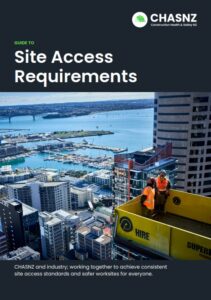
Construction Health and Safety New Zealand (CHASNZ) developed the Site Access Requirements Guide to give the industry a single, consistent baseline for worker competency on construction and infrastructure sites.

The guide sets out a clear approach:

On page 5 of the guide, CHASNZ specifically names the Besafe Foundation Toolbox ConstructSafe Preparation course as an example of publicly available foundation training that meets these expectations.

For employers, contractors, and site controllers, that recognition matters. Workers who complete the Foundation Toolbox arrive on site with training that aligns directly with the national guidance, not a generic induction repackaged.

You can read the full breakdown of the CHASNZ Site Access Requirements, what they cover, and how Besafe’s training aligns, on our resource page: CHASNZ Site Access Requirements

Focus areas before the next intake

Before the next group of new starters, subcontractors, or apprentices arrives, the people responsible should be clear on:

Training that builds real capability

Besafe Training offers site access training for every level of worker, from first-day apprentice through to experienced tradespeople updating their credentials.

Our site access and foundation courses include:

Most can be completed in under a day, and the online options can be scheduled around existing work commitments.

👉 Read the full guide: CHASNZ Site Access Requirements

👉 View course details and book now: Site access and ConstructSafe training

Working at height in changing conditions: MEWPs, wind & wet ground

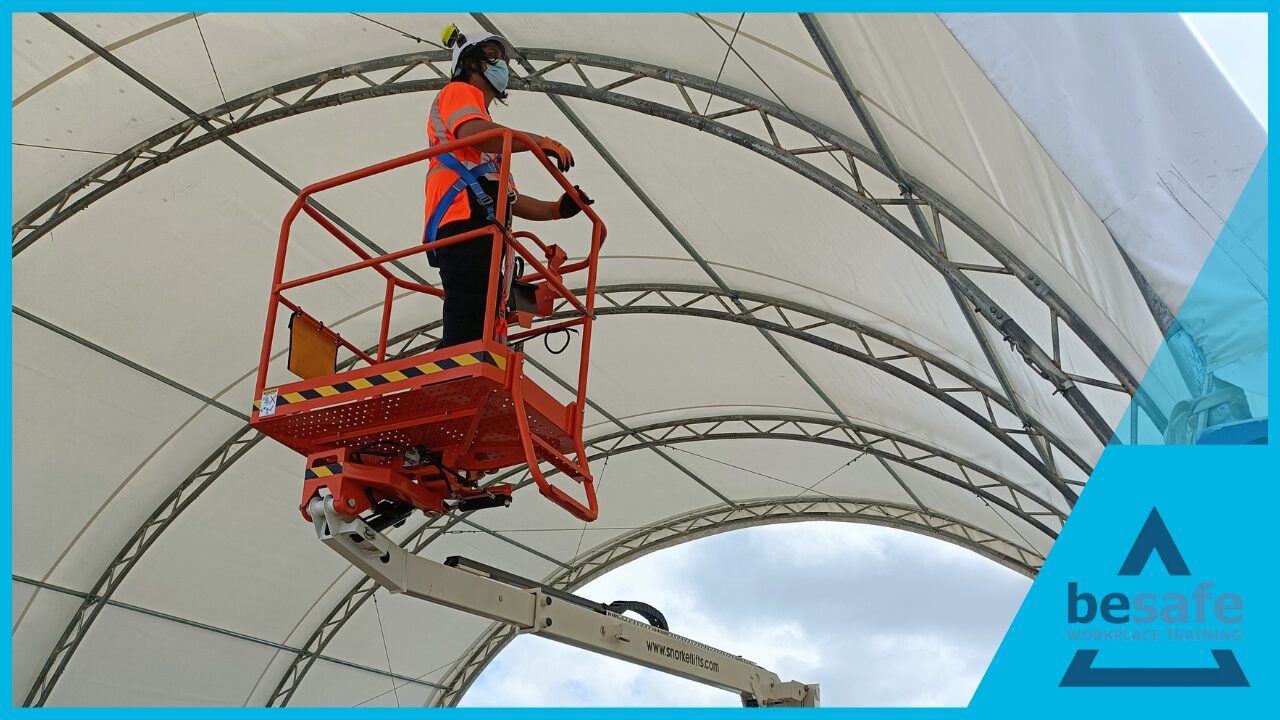
Mobile Elevated Working Platforms make height work faster, safer, and more accessible – when conditions are right.

As we move further into winter, those conditions change quickly.

Wind picks up. Ground gets softer. Surfaces stay wet longer. And the same scissor lift or knuckle boom that performed reliably in summer now needs more attention before, during, and between every use.

Where risk builds

MEWP incidents don’t usually start with operator error – they build from small changes that go unchecked:

Each one is small on its own. Stacked together, they erode the margin you rely on at height.

Two machines, two different risk profiles

Most height tasks across NZ worksites are completed using one of two MEWP types, each with its own considerations:

Scissor lifts

Self-propelled boom lifts (Knuckle Booms)

In both cases, the manufacturer’s data plate and operator’s manual are the source of truth – not assumptions or past experience on a different model.

Focus Areas for Operators and Site Supervisors

Before sending a MEWP up this winter, ask:

Training That Builds Real Capability

At Besafe Training, MEWP training is delivered hands-on – because operating safely is about more than knowing the rules.

Our Mobile Elevated Working Platform (MEWP) course – NZQA 23960, 23966, 23962 covers:

Available as a full-day in-person course, a blended option (online theory with in-person practical), or a refresher for experienced operators whose certification is approaching three years.

View course details and book now: Mobile Elevated Working Platform

CHASNZ Site Access Requirements: What They Mean for Construction Businesses in New Zealand

Health and safety competency is no longer viewed as a “nice to have” in New Zealand construction and infrastructure environments — it is increasingly becoming a minimum expectation for site access.

The CHASNZ Site Access Requirements Guide outlines a nationally recognised approach to improving workforce competency and creating safer, more consistent construction sites across New Zealand. The guidance helps businesses establish a clear baseline for workers entering site environments, reducing risk while improving understanding of health and safety responsibilities.

Site Access Requirements

Importantly, the guide also recognises approved foundation training providers — including Besafe Training Ltd — as a pathway for preparing workers to meet these expectations.


Why Site Access Requirements Matter

Construction sites are dynamic, high-risk environments. Workers may encounter:

The CHASNZ guidance was developed to create greater consistency across the industry by ensuring workers have a baseline understanding of these risks before stepping onto site.

The framework promotes four key components:

  1. Foundation Health & Safety Training
  2. Foundation Knowledge Assessment (such as ConstructSafe)
  3. Site-Specific Inductions
  4. Appropriate Supervision

Rather than repeating basic health and safety information during every site induction, businesses can focus inductions on site-specific risks and controls, improving efficiency and worker understanding.


Besafe Training Recognised Within the CHASNZ Guidance

On page 5 of the Site Access Requirements document, CHASNZ specifically references the:

“Besafe Foundation Toolbox ConstructSafe Preparation course”
as an example of publicly available foundation health and safety training.

This recognition reinforces Besafe’s role in supporting construction and infrastructure businesses with practical, industry-aligned site access preparation training.


The Besafe Foundation Toolbox

Besafe’s Foundation Toolbox Course has been developed in alignment with the CHASNZ Site Access Requirements and focuses on the core knowledge workers require before entering construction and infrastructure environments.

The course covers key risk areas commonly encountered on worksites, including:

The online format allows workers to complete the training flexibly and at their own pace while ensuring consistent delivery of critical health and safety information.


ConstructSafe and Workforce Competency

The CHASNZ guidance also identifies the importance of independent competency assessment through ConstructSafe.

ConstructSafe assessments are designed to verify whether workers understand essential health and safety concepts relevant to construction environments. The assessment is often described as a “health and safety driver’s licence” for the industry.

Foundation training plays a critical role in helping workers prepare for this assessment and, more importantly, helping them apply safer behaviours on site.


Supporting Better Site Access Across New Zealand

For employers, contractors, and site controllers, implementing structured site access requirements can provide several benefits:

The CHASNZ guidance also highlights the importance of supporting workers who may have knowledge gaps, language barriers, or limited site experience — recognising that competency development is an ongoing process, not simply a pass/fail outcome.


Why Businesses Choose Besafe Training

Besafe Training Ltd supports organisations across New Zealand with flexible health and safety training solutions including:

With training designed around real industry environments, Besafe helps businesses build workforce capability while supporting compliance and safer work practices.


Looking Ahead

As construction and infrastructure projects continue to raise expectations around worker competency and site access, businesses that proactively prepare their workforce will be better positioned to meet client, principal contractor, and site requirements.

The CHASNZ Site Access Requirements provide a practical framework for achieving this — and recognised training providers such as Besafe Training play an important role in helping workers and businesses meet the standard.

The Safety Lessons We Must Never Forget

Workplace health and safety laws, systems, and standards have improved significantly in recent years. Many industries across New Zealand now have stronger processes, better equipment, and clearer expectations around managing risk.

But one challenge remains constant: organisations — and the people working in them — can forget important safety lessons over time.

As staff move on, new workers join teams, systems evolve, and the memory of past incidents can fade. When that happens, there is a risk that the same mistakes can quietly reappear.

Strong safety cultures aren’t built on compliance alone. They rely on leadership, ongoing training, and workers who feel confident to speak up when something doesn’t seem right.

Across industries such as construction, infrastructure, manufacturing, and utilities, many of the most serious incidents involve hazards that workers face every day — working at height, confined spaces, heavy equipment, hazardous substances, or other high-risk environments.

Serious incidents are often not caused by a single mistake. More commonly, they occur when multiple weaknesses in controls, communication, or procedures combine — a procedure that isn’t followed, a hazard that goes unreported, or a risk that is underestimated.

Maintaining safety knowledge across a team is essential. Clear procedures, regular training, and strong communication help ensure that critical safety practices remain front of mind. This becomes especially important when new team members join, or when workers move between different projects or sites where they may be exposed to unfamiliar or site-specific hazards.

Regular training also gives workers the opportunity to refresh their knowledge, practise safe techniques, and stay confident when working in higher-risk environments.

Creating safer workplaces isn’t about reacting to incidents after they happen. It’s about maintaining awareness, reinforcing good practices, and making safety part of everyday work.

When businesses — and the workers doing the mahi — continue to invest in safety knowledge and skills, it helps ensure that the lessons learned across industries, sometimes at a high cost, are not forgotten.

📅 Spaces in some upcoming sessions are filling quickly.
Secure your spot now or get in touch if you’d like help planning training for your team.

0800 333 899 | www.besafetraining.co.nz | sales@besafetraining.co.nz

— The Besafe Training Team

Two Skills Every Worker Should Refresh Before Summer

With summer here, you’re probably thinking about sharpening your tong skills for the BBQ, or fine-tuning that sidestep to dominate beach footy 🏉🔥. But while the holiday rhythm is kicking in, summer on site brings its own challenges — and two safety skills become absolutely critical:

1) Spotting hazards early

2) Responding the right way when something changes

As you push toward the Christmas break, risk increases. Fatigue builds, temperatures climb, stress increases. These conditions create the perfect environment for missed hazards and rushed decisions.

The workers who stay safe are the ones who can recognise when something doesn’t look or feel right — and speak up before the job becomes unsafe.

So, take a moment. Take a breather. Plan your work (and training 😉) for the final run into Christmas. Make sure you and your team get home safely for the break you’ve earned.

💬 Talk to Our Team

Have questions or want help planning your bookings?

📞 Call us: 0800 333 899
📧 Email: sales@besafetraining.co.nz
🌐 Book online: www.besafetraining.co.nz

The Besafe Team

Fatigue, Pressure, Deadlines — Why Team Support Matters in December

Fatigue, Pressure, Deadlines — Why Team Support Matters in December

We’re almost into December 🫨 — but we don’t slow down until tools are down and the last person leaves site. Staying on top of health and safety is critical. We want everyone to get through these final weeks of the year safely and home to their whānau for a well-deserved Christmas break.

This week, keep an eye on your team and your workmates. Psychosocial factors — including team support, trust, and communication — directly influence safety behaviour and incident rates, especially as workloads ramp up and fatigue creeps in. Strong support from colleagues can make all the difference.

Later this afternoon, keep an eye on your inbox for exclusive pre-release access to our epic December giveaway. We’re giving our loyal customers the first look before it goes public. 👊😊

And as always, check out next week’s training schedule — we’re delivering a full lineup of courses right through December 👉Our Courses – Besafe Training Ltd

The Besafe Team

Asbestos Awareness Week: No Excuses for Putting Workers at Risk

Key takeaway: Asbestos exposure is 100% preventable — but only if you identify it before work starts. This week is the perfect reminder: if you’re working on a pre-2000 building, assume asbestos, check the plans, and protect your team.

Asbestos Awareness Week 2025: no excuses for putting workers at risk.

Asbestos is still New Zealand’s number one workplace killer. Despite the risks being well known for decades, around 220 people here die every year from asbestos-related diseases such as mesothelioma, lung cancer, and asbestosis. The really tough part? Symptoms often don’t show up until 10–40 years after exposure. (WorkSafe)

This Asbestos Awareness Week (17–23 November), WorkSafe & Besafe are calling on businesses, PCBUs, and tradies to lift their game and make sure workers are not being exposed to asbestos fibres when they don’t need to be. There’s no excuse for “just drilling one hole” or “quickly cutting that sheet” when the material hasn’t been checked.

Where asbestos is still a risk

If you’re working in or on buildings built before the year 2000, there’s a real chance asbestos-containing materials are present – in linings, claddings, vinyl, textured coatings, insulation and more. Any work that cuts, drills, sands, breaks, or removes these materials can release invisible fibres into the air.

Practical steps you can take this week

Use Asbestos Awareness Week as a prompt to:

  1. Check your asbestos management plan – If you manage or control a workplace, you must have an up-to-date plan.
  2. Review upcoming work – if there’s any cutting, drilling, demolition, or refurbishment planned, confirm whether asbestos is present before work starts.
  3. Talk with your team and contractors about the rule: “If you don’t know what it is, don’t disturb it.”
  4. Use the free WorkSafe resources – templates for asbestos management plans, updated guidance on asbestos in workplaces and homes, PPE advice, registers of licensed removalists and assessors, and information on where to dispose of asbestos waste safely. Find resources here: www.worksafe.govt.nz/asbestos

Asbestos disease is preventable. Taking the time now to understand where asbestos might be, manage it properly, and make sure your team is trained and informed is one of the most important health and safety steps you can take.

Don’t guess — get trained.

➡️ Besafe delivers Asbestos Awareness, Class A, Class B, and Assessor training to meet your regulatory requirements. Get your team qualified by experts.

Why Book Now?

✔ Reduce incidents and improve on-site decision-making
✔ Stay compliant with NZQA-aligned, industry-led training

Click here to view our courses & book asbestos training.

What Makes a Great Safety Observer? (And Why It Matters)

👉 Plus two essential November courses to sharpen your skills

A great safety observer isn’t just an extra set of eyes on site — they’re a critical control that protects workers from serious harm. Whether you’re guiding heavy vehicle movements, monitoring work near overhead lines, or supporting high-risk tasks, the right observer can prevent incidents before they happen.

A skilled observer is alert, confident, and trained to recognise hazards in real time. They understand safe approach distances, communicate clearly, know when to stop the job, and work as part of a wider safety system — including LOTO, isolation, and risk assessment processes. When conditions change, a good observer responds immediately, keeping people safe and work moving smoothly.

Key takeaway: If you or your team work around moving plant, traffic management, or high-risk activities, now is the perfect time to sharpen these skills.

Upcoming Courses – Wednesday 19 November (Albany Training Centre)

🔹 Safety Observer – Albany, Wednesday 19th November 7:30am – 12:00pm
This practical course strengthens your ability to spot hazards, guide operators, and maintain safe distances. Learn the communication, positioning, and decision-making skills every effective observer needs on site. Book… Save 20% on this course using the code SAFE20

🔹 Hazard & Risk Management – Albany, Wednesday 19th November 1:00pm –3:30pm
Equip yourself with practical tools to identify hazards, assess risk, apply the Plan–Do–Check–Act model, and select effective control measures. Ideal for anyone responsible for workplace safety, compliance, or pre-start checks. More…

Spring Safety on Site: Changing Weather, Changing Risks 🌦️

Spring has arrived across NZ, and with it comes some of the most unpredictable weather of the year. We feel for the cricket fans out there — with so many games being called off due to rain, you’ll know just how changeable the season can be.

While spring’s conditions might disrupt our social plans, they have an even bigger impact on the worksite. Wind, rain, sun, and sudden changes in temperature all play a role in site safety.

Wind 🌬️

High or gusty winds can quickly make tasks unsafe. Working at heights, using MEWPs, or lifting loads with cranes all become high-risk when wind speeds pick up. Always check the forecast, know your equipment limits, and don’t be afraid to pause work if conditions change.

Rain 🌧️

Rain doesn’t just make things wet — it makes surfaces slippery, reduces visibility, and can affect electrical work. Wet weather gear helps, but it’s equally important to reassess hazards before carrying on.

Sun ☀️

It might not feel like summer yet, but the UV levels in spring can still cause sunburn and heat stress. On warmer days, heat exhaustion becomes a real possibility. Watch for signs like dizziness, cramps, or heavy sweating — rest, hydrate, and cool down early to prevent it from escalating.

If ignored, heat exhaustion can tip into heat stroke, a serious and potentially life-threatening emergency. Signs include confusion, hot dry skin, and collapse. If you see this in a workmate — call 111 immediately and start cooling them down while you wait for help.

✅ Key takeaway this spring: Plan for changing conditions and keep reviewing hazards as the day goes on. Wind, rain, and sun can all turn a straightforward job into a dangerous one if not managed well. Stay alert, look after your crew, and make sure everyone gets home safely at the end of the day.

At Besafe Training, we’re more than just a training provider — we’re a team committed to helping businesses and workers succeed safely.
✅ Nearly 99% student satisfaction
✅ Courses delivered across Auckland and New Zealand
✅ NZQA-approved training that keeps teams safe, compliant, and confident on site
This short video shares a snapshot of who we are and what we do.
Because safety isn’t just a requirement — it’s the foundation of productivity, resilience, and success.
▶️ Watch the video below to learn more about Besafe Training.
📞 Get in touch with us today to discuss how we can support your team: 0800 333 899 or info@besafetraining.co.nz

Is Your Training Up to Date?

Work in the construction and infrastructure sectors is about to pick up speed as projects ramp up from late 2025. When the jobs start rolling in, the last thing you want is to be held back by expired training or overdue refreshers.

For individuals and subbies, being current means you can step on site without delay. For businesses, it means your teams are compliant, confident, and ready to keep projects moving safely and efficiently. Taking a moment now to check — are your workers’ certifications up to date, and do they have the skills they need? — can save costly delays down the track.

Don’t wait until you’re mid-project to discover someone isn’t cleared for confined space entry, working at heights, MEWP or other critical tasks. Take stock now, and set yourself — and your business — up for success in the busy period ahead.

👉 If you’re unsure, get in touch with us and we’ll help you get up to date.
📞 Call 0800 333 899 or ✉️ email info@besafetraining.co.nz

Why a well-prepared workforce goes further than compliance

Why a well-prepared workforce goes further than compliance

The construction and infrastructure sectors are heading into one of their busiest periods in years. As major projects ramp up from late 2025, the expectations on businesses to deliver safely, efficiently, and within budget will only grow.

Meeting compliance is important, but a well-prepared workforce goes far beyond ticking boxes. It’s about building a foundation of productivity, resilience, skill, and confidence — supported by the right training and equipment. When people are equipped with the knowledge and tools they need, less time is lost fixing mistakes, more progress is made on site, and everyone returns home safely.

At Besafe Training, we see compliance as the starting line, not the finish. Our focus is on helping trainees build strong health and safety foundations that enable them — and the businesses they work for — to succeed in the work ahead.

Pipeline Projects Are Coming — Will Your Workforce Be Ready?

After one of the toughest periods in recent memory for New Zealand’s construction and infrastructure sectors, there’s a fresh sense of momentum in the air.

While residential construction remains subdued, infrastructure and civil works are showing real promise. At the recent Civil Contractors New Zealand conference, the Prime Minister reaffirmed the Government’s commitment to a strong pipeline of infrastructure projects — backed by long-term investment and a renewed focus on maintenance, renewals, and new works. Industry leaders left with a level of optimism we haven’t seen in some time.

That optimism is reflected in the latest Kennards Hire Construction Confidence Check, which found 93% of New Zealand construction decision-makers are confident about the industry’s performance over the next five years. Major projects are expected to ramp up from late 2025 into 2026, and forward-thinking businesses are already preparing their teams.

Why book training now?

Besafe Training General Manager Jason Braithwaite says now is the perfect time to get ahead:

“The training industry is competitive right now — making it the perfect time to secure courses. Competitive offers, such as Besafe’s Multi Ticket Deal (x 4), are proving popular with businesses that have work in the pipeline. Smaller companies are also taking advantage of our online and blended training options to minimise time off site while maintaining quality — crucial when margins are tight and every minute of your FTEs’ time counts.

It’s beginning to feel like the industry has turned a corner, with strong momentum from companies investing in their teams’ skills and compliance. This renewed focus signals a shift toward growth and resilience, with businesses recognising that a well-trained workforce is central to productivity, safety, and long-term success.”

Innovation driving value

Innovation — one of Besafe’s core values — has been key to moving forward.

“We’ve expanded mixed delivery options and introduced qualifications like the New Zealand Certificate in Workplace Health and Safety Practice (Level 4) —a 16-week course, completed through our online learning platform. Students are supported with a dedicated facilitator through zoom sessions, digital content, workplace activities and discussion boards.

To make it easy for businesses to explore our forward-thinking training solutions, we’ve launched our new Innovation page — bringing together blended and online courses, company bookings, residential partnerships, and our Employment Pathways Programme. You’ll also find practical resources, case studies, and ideas to support toolbox talks and training.”

The projects are coming — make sure your workforce is ready to step onto site with the skills, compliance, and confidence to deliver.

From “I’m Not Sure” to Confident and Capable

From “I’m Not Sure” to Confident and Capable: The Power of Training Within the Zone of Proximal Development

In this blog, our General Manager Jason Braithwaite shares reflections on how our training approach is shaped by the Zone of Proximal Development — a concept that helps learners move from uncertainty to confidence with the right support, at the right time. 

Recently I have been reflecting on what makes training truly effective — especially in health and safety. We don’t just want our learners to complete a course. We want them to leave feeling confident, competent, and ready to apply what they’ve learned in real-world situations. This is where Vygotsky’s Zone of Proximal Development (ZPD) comes in — a concept that shapes how we train.

ZPD describes the space between what a learner can do independently and what they can do with guidance. In our view, this is where meaningful learning — and safer workplaces begin. Across our courses and programmes, we intentionally design our delivery to operate in that space: Trainers scaffold learning by offering the right support at the right time — never too much, never too little.

Practical training environments reflect industry scenarios so learners can apply theory with support before doing it solo. If you haven’t visited our Wiri Training Facility, make sure you drop in for a tour next time you are in the area (211 Roscommon Rd, Wiri). Peer learning is encouraged — especially for new or returning trainees who benefit from hearing real experiences from those further along. We adjust the pace when needed. Sometimes the most powerful learning moment happens when a learner says, “I’m not sure,” and we help them work it out together.

We’ve seen time and again that this approach doesn’t just improve knowledge retention — it changes behaviour. And in our field, behaviour saves lives.

I’m proud to work with a team that sees each learner not just as a seat in a classroom, but as an individual on a journey — from unsure to capable — with us walking alongside them.

Hands-On Training That Drives Safety and Productivity — Not Just Ticks Boxes 👷‍♂️📚

Hands-On Training That Drives Safety and Productivity — Not Just Ticks Boxes 👷‍♂️📚

At Besafe, we believe training should be more than theory. It should prepare people for the real hazards they face on the job — and give them the skills and confidence to make safe choices under pressure.

In New Zealand, the construction industry continues to carry one of the highest rates of workplace harm. In the past year alone, there were 28,188 work-related ACC injury claims from construction — more than any other sector. Auckland and Canterbury recorded the highest volumes of these claims.

That’s why real-world, hands-on training matters.

Whether it’s putting on a harness, operating machinery, or entering a confined space, our learners don’t just sit through slides — they do the work, using real equipment in realistic environments. We train how people actually work: practical, relevant, and grounded in industry best practice.

The result we’re working toward?

Fewer incidents. Safer sites. People getting home safe at the end of the day.

Staying Safe in Wet Weather

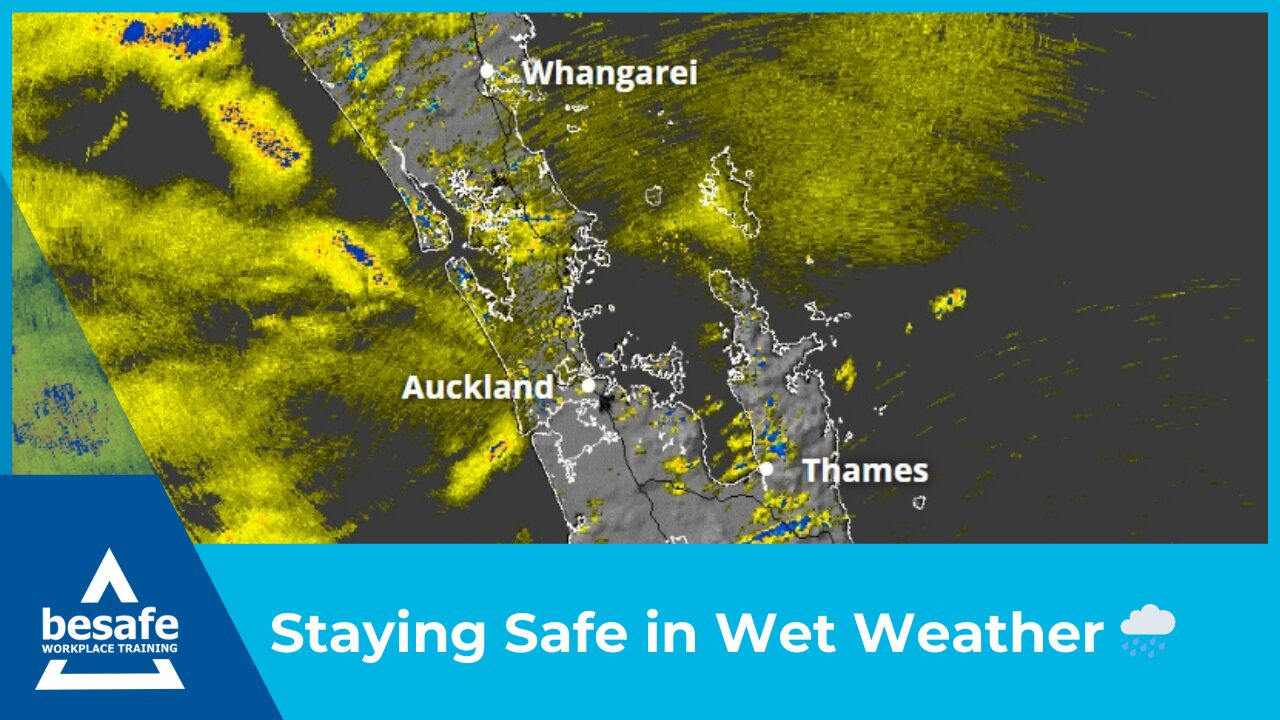
Health and safety doesn’t take a break when the weather turns — in fact, it becomes even more important. As heavy rain and storms roll in, staying alert and prepared is key to keeping your team safe on site and on the road.

Wet conditions increase the risks — with slippery surfaces, reduced visibility, noise hazards, unstable ground, higher chances of equipment malfunction.
That’s why wet weather safety is about more than rain jackets — it’s about planning ahead, communicating clearly, and knowing when to pause the job.

✅ Check your site hazards and access points
🛠️ Make sure PPE and wet weather gear is up to standard
📋 Review your emergency plans and procedures
📞 Keep communication lines open and clear
🚫 Don’t be afraid to postpone or stop work if conditions aren’t safe

Public holidays are coming up too — so make sure any unattended sites are secure, and signage is clear.

When your team knows what to expect and what’s expected of them, they’ll make better decisions in tough conditions — and come home safely at the end of the day.

Staying Sharp in a Short Week

Public holidays are great for rest and reset — but short weeks can throw off routines, reduce focus, and increase the risk of cutting corners.
After a run of days off, it’s common for teams to come back distracted, under time pressure, or simply out of rhythm. That’s when the little things — like a missed check, skipped step, or rushed task — can lead to big consequences.

Now’s the time to double down on the basics:
✔️ Refresh your toolbox talks
✔️ Revisit key safety procedures
✔️ Encourage everyone to take a moment — not a shortcut (or as ACC New Zealand says, “Have a hmmm”)
✔️ Keep the pace realistic, even if you’re playing catch-up

Short weeks often mean trying to do more in less time — but safety can’t be rushed. A few minutes spent reinforcing the right habits is a far better trade than dealing with a preventable incident.

The most effective teams treat every week — short or long — with the same focus and commitment to getting home safe.

Our Safety Poem

🎥 A Year to Remember – Our Safety Poem 🎄

As 2024 comes to a close, we wanted to do something special to thank YOU—our amazing students, clients and partners—for an incredible year. 💛

Here’s a little poem to celebrate the successes we’ve achieved together and to remind us all to stay safe this summer. ☀️ (Slip, Slop, Slap, Wrap—and let’s leave the sizzling to the steaks on the grill!) 🥩🔥 From delivering 12,000+ NZQA units to helping 116 workers into jobs, it’s been a year to be proud of—Massive thanks to you. 🙌

Enjoy the video, have a Merry Christmas, and here’s to an even brighter and safer 2025! 🎉

Check Your Training is Up to Date

Make the Most of Your Time Off

Keep these tips in mind, and let’s make it a safe and productive summer season!

BeSafe Blog – Permit Culture

Permits the red herring of workplace health and safety


A culture of compliance does not necessarily make a safety culture, as evidenced by the ongoing problem of workplace accidents.


Let’s be clear, permits and signs do not protect workers. Unfortunately, actual health and safety measures are often forgotten in the rush to complete the paperwork.


As an NZQA and CHASNZ accredited health and safety training provider that helps companies and students, mostly in the construction sector, take ownership of their time and productivity with a blend of online and practical learning courses – there’s no question in our minds that there’s too much emphasis on tick box safety.


We have a culture of paper health and safety, but proper measures like assessing risk, putting in place appropriate controls and ensuring they are enforced does not get the attention it deserves.


In 2022 there is a lot of data and information to help improve how work is performed and that actual freak accidents – the ones nobody saw coming – are incredibly rare.


When a workplace accident occurs, it is usually because of a failure of assessment, process or practice. There needs to be some real education of directors and management around understanding their obligations, as well as of workers.


  1. Cultural shift


Sadly, workplace accidents will continue until there is a significant cultural shift in health and safety regarding both attitudes and practice. The general workplace approach to health and safety is still too blasé. There’s a lot of lip service but very little practical application.


  1. Visible regulation 


The legislation around health and safety is too loose and characterised by sweeping statements but little direction on putting it into practice.


We need more vocal and more visible regulators. The data that we get from Government is out of date by the time it gets to us, so that needs to be more real-time because right now it is a lagging indicator.


  1. Better education


I look forward to when health and safety training is done for the benefit of worker safety instead of the current tick-box culture where there’s too much emphasis on paperwork and less so on skills and proper health and safety practise.

BeSafe Blog – Too many companies neglecting to elect health and safety reps

By Jason Braithwaite


Despite statutory obligations that work site health and safety representatives be elected by their colleagues – which helps ensure better health and safety outcomes – we see that the majority of safety reps who attend health and safety training appeared to be appointed by their employers – this is a mistake.


It is a mistake because elected health and safety representatives are more likely to be passionate about safety.


As the voice of the workers, safety reps do have statutory power to direct a worker who is in their work group to cease work that is not safe. In our experience, however, appointed health and safety representatives are less likely to want to rock the boat.


For a business of twenty or more staff, or where sites are considered high risk – like building construction, heavy and civil engineering construction, food production and manufacturing – employers are required to hold an election for a health and safety representative. However, most of the safety representatives we talk with are appointed by their bosses.


This is because some employers just don’t know, or they may be reluctant to take their chances with an elected health and safety representative because the rep has the power to issue a provisional improvement notice (PIN) and stop work if necessary. Employers, understandably, are reluctant to relinquish control or risk finding themselves in a fractious relationship.


Once a health and safety representative is properly trained, they can better identify a high-risk area and ask their employer to fix the problem, issue a PIN, report the matter to WorkSafe or halt work until the problem is fixed. All of these measures can have a substantial impact on the business. It makes employers nervous.


However, let’s remember that it is the workers who are on site day in and day out and who are exposed to the risks. The safety representative who is conscientious about their responsibilities fulfils a vital role in communicating hazards to employers and ensuring they are rectified.


  1. There should always be a health and safety representative


Workers frequently complain that they can’t get their bosses to listen to their concerns. A health and safety representative solves that problem, provided the rep takes their elected role seriously.


  1. Elect, don’t appoint


In addition to being a legislative requirement, health and safety representatives chosen by their colleagues are likely to be more passionate and conscientious about the role, which in the long run saves lives and ultimately protects the business as well.


  1. Training is essential


A trained health and safety representative makes a site safer. Their enhanced ability to do proper risk assessments and communicate with workers and bosses means they are less likely to make costly mistakes for both workers and employers.


An elected health and safety representative, because they are the kind of person that can get elected, is more likely to have essential communications skills.


Health and safety needs to be taken extremely seriously because it is about health, lives, and livelihood. We want mums and dads to get to come home to their families at the end of the day.

BeSafe Blog – Attention employers: Beware of issuing branded cloth masks

Attention employers: Beware of issuing branded cloth masks


By Jason Braithwaite


Brand cloth masks are good marketing and they meet current Government guidelines, but they should be viewed as professional protective equipment and, as such, they are not up to standard when it comes to making your team safer from Omicron.


Bear in mind that as an employer you are responsible for the health and safety of your staff on-site, and issuing PPE equipment that is not fit for purpose could have implications in the future.


The ambiguity, and potential unreliability, of public health advice was brought to light recently when Canada Post insisted an employee wear the company’s branded cloth mask. The worker was stood down after he insisted on using an N95 grade mask to protect his wife, who has pre-existing conditions.


If your staff were working at heights, you wouldn’t issue them with a poor quality harness. The same applies to the masks. Besides the fact that staff members are more likely to get ill, even seriously ill, your business will suffer when half your team is off sick.


Here at BeSafe, we had to review the use of branded cloth masks to align with the current recommendations. It’s a great bit of branding, and you think you’re doing the right thing, but if you want to protect your team and your business, toss the branded cloth masks and go with an N95 grade mask.


  1. Use good quality safety equipment


The evolving nature of the pandemic has resulted in oscillating messaging over the last couple of years, but the world has steadily moved towards best practice. I don’t doubt that it won’t be long before N95 becomes the standard. It is better to equip your staff with the best when it comes to protecting them, your business and your customers.


  1. Train staff in how to fit the mask


Like any other health and safety measure, your staff should be trained in best practice, and that includes fitting a mask properly. Even an N95 mask that has been poorly fitted will fail.


  1. Monitor maintenance


You can wash disposable surgical masks or implement a rotation system if using N95 masks. New Zealand research suggests that washing surgical masks saves money, helps the environment and is still ten times better than a triple-stacked cloth mask. Ensure your staff are cleaning and maintaining their equipment.


Companies could take a guidelines approach or a standards approach but should adopt a standards approach with PPE gear because it is a health and safety issue. You can aim to be compliant, or you can aim to be a leader and do a job that will get the better result.


Address: 1B Beatrice Tinsley Crescent, Rosedale, Auckland 0632

+ Google Map

Phone: +64 9 555 2365

Email: info@besafetraining.co.nz

This website has been developed for modern browsers. To view this website please update your browser here browsehappy.com. Thank you.